
Every family that tries to manage technology eventually accumulates rules. Some are announced with confidence. Others form quietly after a series of small irritations. A few survive contact with real life. Many do not.
This article is a record of the technology rules our household has tried over time: the ones that proved durable, the ones that needed significant revision, and the ones we dropped because they created more friction than they removed. It is not a universal template. It is a set of observed outcomes from living with the rules rather than merely declaring them.
The useful question is rarely “What is the ideal rule?” It is “What rule can this household still follow on an ordinary Tuesday?”
Rules We Kept
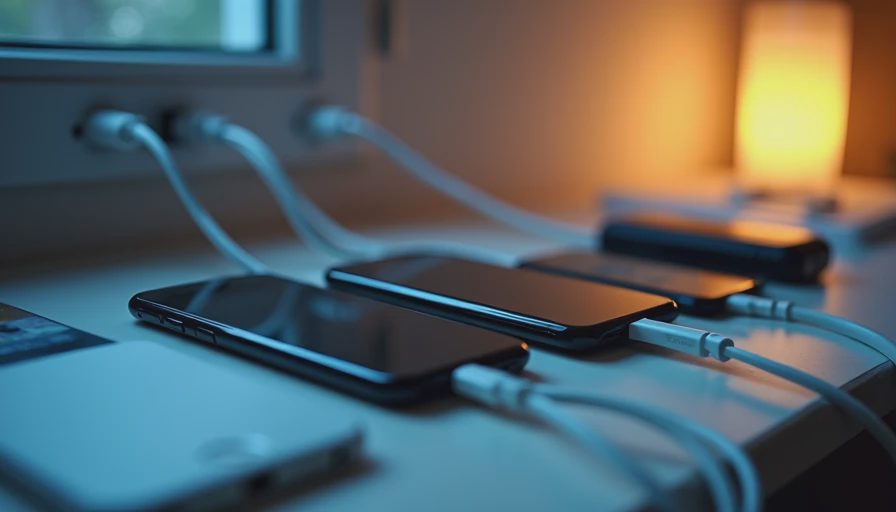
These are the rules that remained mostly intact because they reduced friction without requiring constant enforcement.
Devices Charge Overnight Outside Bedrooms
Personal phones and tablets spend the night in a common charging location rather than on nightstands. The rule is simple, visible, and binary.
Why it survived:
It improved sleep with almost no ongoing negotiation. Once the charging habit formed, the rule largely enforced itself. Exceptions exist for genuine on-call needs or travel, but the default stayed stable.
What made it workable:
A single, convenient charging station and consistent modeling by the adults. Rules that require nightly reminders tend to fail; this one became environmental.
Shared Screens Are Chosen Openly
In common rooms, content on the television or other shared displays is selected in the open. Anyone present can see what is playing and can object without needing to police a private device.
Why it survived:
It removed a class of hidden conflict and made household norms easier to maintain across age differences. It also reduced the sense that someone was disappearing into a private feed while physically present.
Guests Receive the Guest Network Password, Not the Main One
This is a technical rule with social benefits. Visitors get online access without receiving credentials that unlock the primary household network.
Why it survived:
It is easy to execute, requires no ongoing discussion, and cleanly separates convenience from broader access. Once configured, it becomes automatic.
High-Noise Notifications Are Treated as a Shared Problem
Audible alerts and persistent banners in common spaces are limited by default. The expectation is that devices do not fill shared rooms with sound unless the alert is genuinely time-sensitive.
Why it survived:
The benefit is immediately noticeable in quieter meals and conversations. The rule focuses on the environment rather than on policing every individual’s screen time totals.
Rules We Changed
These started with a clear intention but required adjustment to remain usable.
From Strict Daily Screen-Time Minutes to Protected Times and Places
We originally tried precise daily minute caps across devices. The tracking and negotiation became a second job.
What changed:
We shifted emphasis to protected contexts—no personal devices at the dinner table, personal screens moving to the charging station at a set evening hour on school nights, and clearer boundaries around homework blocks. Minute counting became secondary.
Why the change was necessary:
Exact minute caps required constant measurement and invited continuous bargaining. Context-based rules were easier to see and enforce without turning every evening into an audit.
From “No Devices in Bedrooms Ever” to “No Overnight Personal Devices in Bedrooms”
An absolute ban proved brittle. People needed private space for calls, reading, or quiet downtime.
What changed:
The durable version became about overnight charging location and the removal of the always-within-reach temptation during sleep hours. Daytime or early-evening use in a bedroom is handled with more flexibility.
Why the change was necessary:
Over-broad rules generate quiet exceptions and resentment. Narrowing the rule to the highest-cost behavior (overnight access) preserved most of the benefit while reducing enforcement load.
From Full App-by-App Approval to Category Limits and Periodic Review
Early parental-control setups tried to gate almost every new app. The administrative overhead grew quickly.
What changed:
We moved toward broader category limits, age-appropriate defaults, and a lighter periodic review rather than real-time approval of every install.
Why the change was necessary:
High-maintenance approval processes eventually get bypassed or abandoned. A simpler structure that still blocks the highest-risk categories proved more sustainable.
Rules We Abandoned
These looked reasonable at the outset and failed in practice.
Zero-Tolerance for Any Screen Use During Homework
The intention was unbroken focus. The reality included legitimate needs for digital readings, research, or school platforms.
Why it was abandoned:
The rule collided with how schoolwork actually functions. It produced either constant exceptions or counterproductive workarounds. We replaced it with clearer expectations about distraction apps and protected focus blocks rather than a blanket ban on screens.
Mandatory Technology-Free Weekends
An occasional offline stretch can be valuable. A standing rule that every weekend must be technology-free did not survive varying schedules, social plans, work realities, or weather.
Why it was abandoned:
Rigid calendar-based bans created more negotiation than freedom. We kept the option of intentional offline periods and dropped the universal mandate.
Requiring Every New Device to Be Approved in a Formal Family Meeting
Involving everyone in major purchases remains useful. Treating every minor accessory or replacement as a formal agenda item became bureaucratic.
Why it was abandoned:
The process cost exceeded the benefit for small decisions. We retained deliberate discussion for significant or shared-impact purchases and allowed lighter handling of low-stakes items.
Trying to Maintain Identical Rules for Every Age and Every Device
Uniformity felt fair in theory. In practice it ignored developmental differences and distinct device roles.
Why it was abandoned:
A phone, a shared living-room television, and a school-issued tablet present different risks and different legitimate uses. Age-appropriate and context-appropriate variations proved more workable than rigid equality of rules.
Patterns That Determined Survival
Looking across the kept, changed, and abandoned rules, a few patterns repeat.
Rules That Survive Tend To Be
Visible and environmental rather than dependent on constant monitoring
Narrow enough to address a real high-cost behavior
Easy to explain in one or two sentences
Compatible with how school, work, and social life actually function
Supported by simple technical defaults where possible
Rules That Fail Tend To Be
Highly dependent on real-time adult enforcement
Over-broad, capturing too many low-stakes behaviors
In conflict with external requirements (school platforms, work on-call realities)
So rigid that ordinary life generates constant exceptions
Focused on symbolic purity rather than friction reduction
The surviving rules share a common trait: they make the desired behavior the path of least resistance. The abandoned ones often tried to substitute willpower and surveillance for better design.
How We Review Rules Now
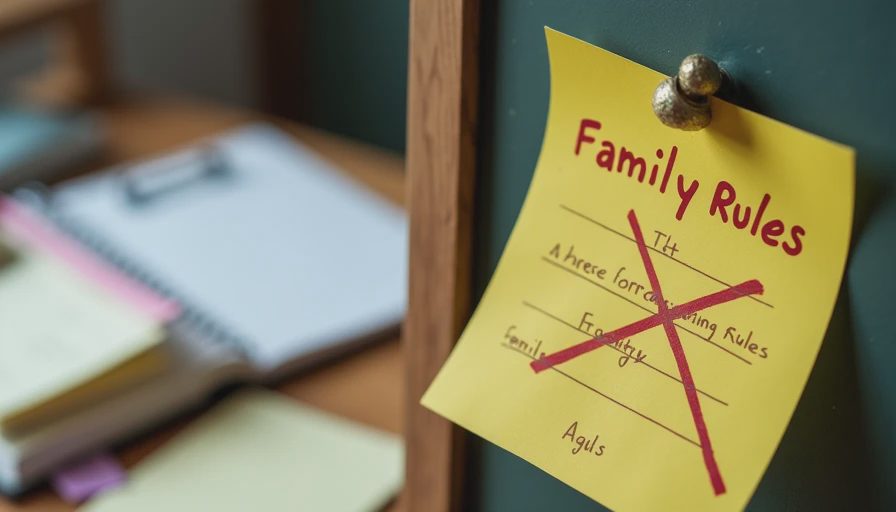
We no longer treat household technology rules as permanent legislation. A light review a few times a year is usually enough. The questions are practical:
Which rules still reduce real friction?
Which ones generate repeated negotiation or quiet non-compliance?
What has changed in school, work, or device use that the old rule did not anticipate?
Is there a simpler version that would capture most of the benefit?
Rules that no longer earn their place are revised or retired without much ceremony. The goal is a quieter house, not a perfect policy handbook.
The Standard That Remains
The through-line across the rules we kept is straightforward: technology should support the household’s life rather than demand continuous management. Rules earn their place when they protect sleep, attention, privacy, and shared time without creating a second layer of daily work.
Some rules we expected to keep fell apart. Some we adopted skeptically became permanent. The only reliable test is living with them long enough to see whether ordinary days get easier or harder.
Before you add another household technology rule, make sure it is one the family can actually live with—not just one that sounds responsible when no one is tired.
No letters yet — be the first guest to write.