A stopped G-Shock usually creates a small but annoying household problem. The watch might be needed for a school pickup, a job site, a workout, or a camping trip, and the dead display gives you no useful warning. This guide to g shock battery replacement explains what to check first, what the job typically costs, and when a professional repair is the better use of your time.
The first step is identifying the exact model. Casio has used different battery types, case screws, gaskets, modules, and water-resistance procedures across the G-Shock family. A DW-5600, GA-100, Mudmaster, and Bluetooth-enabled G-Shock can look related while requiring different parts. Look between the lugs, on the case back, or in the original manual for the model number and module information.
Decide whether the battery is actually dead
A blank screen does not always mean the battery needs replacement. Press several buttons, try the light, and check whether the second hand or display responds. Some models enter a power-saving state, while others show faint digits when the battery is nearly exhausted. If the watch was recently exposed to water, impact, or extreme heat, the fault could involve a damaged seal, contact, or circuit rather than the cell itself.
For a digital G-Shock, note whether the alarm, backlight, and mode buttons work inconsistently. A weak battery often causes a dim display, failed illumination, or a module that resets when a function is activated. Take a quick photo of the current time, alarm settings, and world-time configuration before opening anything. That small record saves frustration later, especially if the module loses its settings during g shock battery replacement.
The battery itself commonly costs about $3 to $12 when purchased alone. A complete kit with a gasket, small screwdriver, and plastic opening tool may cost $10 to $25. A local watch or jewelry shop often charges roughly $15 to $40 for a basic swap, while a water-resistance service or complicated analog-digital model can cost more.

What you need before opening the case
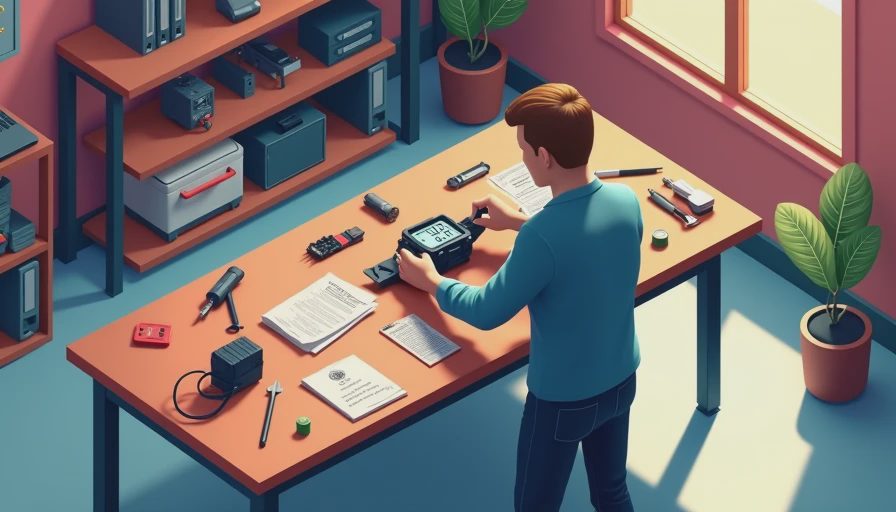
A clean, well-lit table matters more than expensive tools. Use a small Phillips screwdriver that fits the case-back screws exactly, a nonmetallic pick, tweezers, a soft cloth, and a container for screws. Keep children and pets away from the workspace because tiny screws and coin-cell batteries are easy to lose and unsafe if swallowed.
Buy the battery by the exact model specification, not by appearance. Common watch cells include CR2016, CR2025, and CR2032, but similar-looking batteries are not interchangeable in every module. The number identifies dimensions and capacity. Installing the wrong thickness can prevent the case from closing correctly or put pressure on the module.
If the case has a rubber gasket, plan to inspect it rather than automatically reusing it. A flattened, cracked, stretched, or dirty gasket is a water-resistance problem waiting for the next rainstorm. A replacement gasket might cost only a few dollars, but finding the correct one requires the model number. Silicone grease made for watch gaskets can help the seal sit properly; ordinary petroleum products are not a good substitute.
A careful home procedure
Before starting g shock battery replacement, place the watch face down on a soft cloth and photograph the case back. Remove each screw slowly, applying firm downward pressure so the screwdriver does not strip the head. Keep the screw positions organized if they differ in length. Lift the back without forcing it, because a thin spring, buzzer contact, or gasket can move when the cover comes free.
Do not touch the circuit board unnecessarily. Identify the battery retainer and release it with a plastic tool or the tip of a suitable nonmetallic pick. Avoid bridging contacts with metal tweezers. Remove the old cell, install the new one in the same orientation, and check that the positive and negative markings match the holder.
Before closing the case, test the display, light, buttons, alarm, and any sensor functions available on the model. If the screen stays blank, remove power again and inspect the retaining clip and contacts. Do not keep pressing random buttons while the case is open; that can make a straightforward repair harder to diagnose.
Clean the gasket groove, position the seal evenly, and replace the case back without pinching the rubber. Tighten screws in a cross pattern with modest pressure. Over-tightening can damage threads or deform the cover. Successful g shock battery replacement is not just about making the display turn on; it is also about closing the watch in a way that preserves its protection.
Water resistance is the important catch
A G-Shock's water resistance depends on more than a sealed-looking case. The gasket, buttons, crystal, case back, and assembly pressure all matter. Opening the watch at home means you should not assume the original rating still applies afterward. A watch that once handled swimming should be treated more cautiously after a DIY repair unless it has been pressure-tested.
This is where a professional becomes a sensible choice. A watch shop can replace the cell, inspect or replace the gasket, clean the sealing surface, and sometimes test water resistance. Casio service centers may be appropriate for a valuable, specialized, or heavily used model. The extra $20 to $60 can be cheaper than replacing a damaged module after moisture enters the case.
For a basic DW-5600 used for errands and school days, a careful battery swap may be reasonable. For a Frogman, Mudmaster, or watch used for swimming, boating, or outdoor work, preserving the seal deserves priority. Count the cost of the battery, tools, lost time, and possible damage before deciding.
How to avoid repeat failures
After g shock battery replacement, reset the time and test every function over the next day. Watch for a flickering display, random resets, weak light, or buttons that feel different. These clues can point to a contact issue or damaged module rather than a bad new battery. Dispose of the old coin cell through a battery recycling program or a local collection point, not loose household trash where a child or pet could find it.
Keep the model number and battery type in a household notes app. That turns the next repair into a ten-minute purchasing task instead of a search through old receipts. It is also useful to record the replacement month. Many watch batteries last several years, but heavy backlight, alarm, sensor, and Bluetooth use can shorten that period.
If the watch has sentimental value, unusual parts, or a complicated analog display, take clear photos and ask for a written estimate. A repair shop should be able to explain whether the price includes the cell, gasket inspection, labor, and water-resistance testing. Avoid shops that promise a swimming-ready seal without explaining how it will be tested.
The practical household decision
The simplest g shock battery replacement is inexpensive when the model is common, the tools are already available, and water resistance is not central to how the watch is used. It becomes less attractive when the case screws are damaged, the gasket is unavailable, or the watch is needed immediately for water-heavy work. A $25 shop visit can be a good bargain when it prevents an hour of troubleshooting at the kitchen table.
Before you buy it, make sure you can live with the maintenance. G-Shock watches are durable, but durable does not mean maintenance-free. Store the model number, use the correct battery, protect the gasket, and test the watch before trusting it on a trip. The demo is not the daily experience; reliability comes from the small repair decisions made after the screen goes dark.

No letters yet — be the first guest to write.